Gardening Services in Teddington for tidy, workable outdoor spaces

Gardening Services in Teddington should make it easier to keep borders, lawns and planting areas under control without turning routine care into a hassle. Our work covers the practical tasks that help a garden stay neat, healthy and presentable through the seasons, from regular mowing and trimming to more involved clearance and landscaping support. The aim is straightforward: sensible upkeep, clear communication and a result that fits the space in front of us.
Many gardens need a mix of attention rather than one-off treatment alone. We can support ongoing garden maintenance for properties that need regular care, or more focused visits where a specific area has become overgrown, uneven or difficult to manage. If you already know the sort of work you need, start there; if not, a brief note about the garden and the outcome you want is enough to begin a quotation.
For customers looking beyond routine tidying, we also handle larger improvements such as planting refreshes, surface and layout changes, and replacement of tired sections where a garden no longer works as it should. If you want a clearer, easier-to-maintain outside space, our service is built around practical results rather than unnecessary extras. Tell us what needs attention and we can outline the most suitable scope before any work is arranged.
Regular garden care and seasonal maintenance
Regular care is often the simplest way to keep a garden under control, especially where lawns, hedges, edging and beds all need different types of attention. A planned approach reduces the chance of small problems becoming larger jobs, and it helps the outdoor space stay usable rather than waiting for a major tidy-up. We can shape the work around what the garden actually needs, whether that means a full visit or selected tasks only.
Within routine maintenance, common work may include mowing, strimming, light pruning, weeding and removing small amounts of waste created during the visit. Where plants need room to develop, a careful trim can improve shape without stripping the garden back too hard. If you prefer a consistent standard, it helps to say whether the priority is appearance, access, or general health of the planting so the quotation reflects the right balance of tasks. Lawn mowing is often part of this type of care, especially where regular cutting keeps the whole space looking finished.
What routine work usually covers
Routine visits are best used for steady control rather than major redesign. In practical terms, that can include keeping paths and borders clear, reducing uneven growth, and trimming back areas that are beginning to encroach on patios, sheds or fences. For some gardens, the main benefit is visual order; for others, it is about making access easier and preventing the space from feeling cluttered. If you need a quotation, a short description of the current condition is enough to start the process.
Overgrown areas, clearance and waste removal

Some gardens need more than routine tidying, especially after a period of neglect, seasonal growth or a change in how the property is used. Clearance work deals with thicker growth, accumulated cuttings, damaged planting and the kinds of obstructions that make a space difficult to use or maintain. The task may be to open the garden back up, create access again, or prepare a neglected section for new planting or landscaping.
A focused clearance can cover unwanted vegetation, broken materials, old plant debris and other organic waste that has built up over time. Where shrubs or small trees are involved, the work may need more careful cutting back so the remaining structure stays safe and manageable. Garden clearance is often the right starting point when the job is less about routine upkeep and more about restoring order. If the garden includes larger woody growth, there may also be a need for tree lopping and removal where branches, stems or self-seeded growth are creating practical problems.
For many customers, the useful question is not only what should be removed, but what should stay in place. That is why it helps to separate the areas that need a full clear from the parts that only need tidying or shaping. A quotation can then reflect the actual amount of work, the access available and the volume of material involved. If you are unsure where to start, a simple note that the garden needs clearance is enough to begin.
Hedges, shape and boundary planting
Hedges and boundary planting need regular shaping to stay neat, balanced and within the lines of the space. Left alone, they can reduce light, narrow pathways and make the whole garden feel tighter than it should. Careful trimming keeps growth controlled while preserving the character of the planting, whether the aim is a crisp formal edge or a softer, more natural line. Different species need different attention, so the method matters as much as the finish.
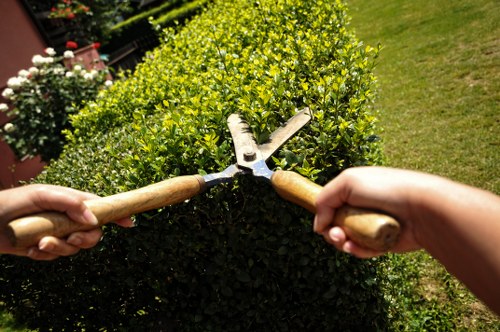
Hedge trimming is best approached with the size, thickness and growth habit of the hedge in mind. A routine trim may be enough for annual maintenance, while older or more vigorous hedges may need staged cutting to avoid exposing bare sections. Where a hedge forms the main boundary, we can also work to maintain height and width sensibly so it remains manageable from both sides. The result should be controlled growth, not a harsh cut that leaves the planting looking sparse.
In some gardens, hedge work sits alongside other maintenance tasks because the boundary planting affects how the whole space functions. A tidy hedge can improve lines of sight, keep edging more defined and make the garden feel better proportioned. If you want the work to be coordinated with mowing or clearance, mention that when requesting a quotation so the scope can be planned as one visit rather than split into separate jobs.
Lawns, edges and finishing details
Lawns often set the tone for the rest of a garden, which is why they benefit from more than a quick cut. A proper finish normally includes even mowing, attention to edges and a check that the surface has not become patchy through inconsistent care. Where the grass has grown away from the regular schedule, the first visit may need to deal with uneven height before the lawn can be brought back into a good routine.
We can include lawn mowing as part of a broader gardening visit or as a focused task on its own. In practical terms, that may involve cutting to a suitable height, working around borders and paths, and making sure awkward corners are not left untidy. If the lawn borders planting beds, a clean edge can make the whole area look more deliberate. For customers who want the garden to look sharper without changing the layout, this is often one of the most visible improvements.
Finishing details matter because they affect how complete the work feels once the main cutting has been done. Edging, light tidying around paved areas and the removal of loose clippings all help the result look intentional rather than rushed. Small details can change the whole impression of a garden, especially where the rest of the space is already well established. If you are arranging a quotation, include the lawn size and whether the edge work needs attention as well.
Landscaping that reshapes how the garden works
Some outside spaces need a more substantial change than maintenance alone can provide. Landscaping can improve layout, access and usability by adjusting the way different parts of the garden relate to one another. That might mean opening up a cramped area, replacing tired features or creating a cleaner transition between lawn, planting and hard surfaces. Good planning makes the space easier to look after as well as better to use.
Our landscaping work can sit alongside softer garden changes where the aim is to refresh the overall structure without losing the feel of the space. Depending on the brief, this may include preparing areas for new planting, making surface levels more practical, or improving the way boundaries and focal points sit together. Where the job involves more visible changes, it helps to be clear about what needs to stay, what can be altered and what outcome would make the garden feel more useful.
There is also a place for more design-led planting changes where a garden needs a stronger seasonal structure or a better balance of colour, height and texture. Landscape gardening can be especially helpful when a space has good bones but lacks coherence. If you want the work broken into stages, say so at the quotation stage so we can reflect that in the scope and sequence of the job.
About Teddington

Teddington is a district in the London Borough of Richmond upon Thames, sitting on the north bank of the River Thames in southwest London. Historically, it developed as a riverside settlement with links to the old parish of Teddington and later became known for suburban housing, local shopping streets and access to open river scenery. The Thames is a defining feature here, especially around Teddington Lock, where the river control structures and towpath routes shape both movement and landscape. The area includes a mix of residential streets, Victorian and Edwardian houses, and later infill development, giving it a varied built character rather than a single architectural style. Teddington also borders Bushy Park to the east, one of London’s major royal parks, which provides extensive open landscape, tree cover and long views that contrast with the denser streets nearby. The local centre has independent shops, cafes and everyday services, while Teddington station connects the area by rail. Nearby landmarks include Strawberry Hill House just to the north-west, a notable Gothic Revival villa associated with Horace Walpole, and several riverside paths that link to wider walking and cycling routes. The mix of river, parkland, suburban streets and historic buildings gives the district a settled, lived-in feel, with much of its appeal coming from the balance between built environment and green space.
Planting, beds and general garden recovery
Once the larger tasks are under control, planting areas often need a careful reset so they complement the rest of the space instead of competing with it. That can mean reworking tired beds, removing failed plants, spacing things more sensibly or creating a clearer structure around seasonal displays. The goal is not to overcomplicate the garden, but to make it easier to maintain and more pleasant to look at throughout the year.
When a garden has lost shape, the right combination of maintenance and planting work can bring back definition without starting from scratch. We can support refreshes where borders need tidying, overgrown clumps need reducing, or certain plants need replacing with something more suitable to the available light and space. For customers comparing options, the most useful information is often what currently grows well, what struggles, and what part of the garden feels most disappointing. That gives a clearer basis for the scope of work.
If you already know the changes you want, keep the brief simple and specific rather than listing every minor detail. The best quotations usually come from a clear description of the outcome, whether that is a cleaner border, a better lawn shape, or a more open layout across a difficult section of ground. Our services overview can help if you want to see the main types of work in one place before deciding how to proceed.
How to request a quotation

A good quotation starts with practical information about the garden rather than a long explanation. The size of the area, the type of work needed and any access limits all help us understand what is involved. If you have a deadline or a preferred visit pattern, include that too. In many cases, one clear message is enough to identify whether the work is routine maintenance, clearance or a more detailed landscaping task.
It can also help to note whether the garden has areas that should be left untouched, such as plants you want to keep, features that need protection or sections that are still in use. If possible, say whether the job is a one-off or part of ongoing care. Clear instructions save time and reduce the chance of quoting for the wrong scope. For straightforward arrangements, plain language is best; there is no need to overstate the problem or describe every square metre.
When you are ready, request a quotation and tell us what your garden needs. If you would like to review pricing and typical factors first, see pricing and quotes. We will then be able to respond with a sensible scope for the work and the next step toward getting the garden into shape.