Recycling and Sustainability for Gardening Services Teddington
 Gardening Services Teddington is committed to an eco-friendly waste disposal area approach that reduces landfill, supports local reuse and promotes a sustainable rubbish gardening area across Teddington and the wider Richmond borough.
Our philosophy blends traditional garden care with modern green logistics: segregating green waste, preserving soil nutrients through composting, and diverting materials to reuse routes. We work to align with the borough's waste separation expectations—lightly separating organics, garden recyclables and inert wastes in line with Richmond upon Thames' approach to household and municipal collections.
Targets and measurable goals
We have set a clear recycling percentage target: a minimum of 75% diversion from landfill for gardening-related rubbish by 2027, with incremental yearly milestones. That target covers green waste, timber, brick and paving reuse, soil reuse and clean inert aggregates. Our sustainable gardening waste targets are monitored quarterly and reported internally to ensure continual improvement.
Practical green waste processes
To deliver on our eco objectives we maintain an organised, localised waste flow:
- On-site separation: clear bins for organics, wood, recyclable plastics and metals, and inert soils.
- Composting and mulching: turning garden cuttings and prunings into reusable mulch on-site or at partner composting facilities.
- Material reuse: salvaging paving, bricks and larger intact materials for client reuse or resale through partners.
We ensure operatives are trained in the borough's kerbside and transfer station rules so that materials are separated in a way that maximises recycling rates and avoids costly contamination.
Our operations map local transfer stations and hubs to keep journeys short and emissions low. We prioritise Richmond upon Thames transfer stations and approved third-party sites that accept segregated garden waste streams, composting inputs and clean construction-grade inert materials.
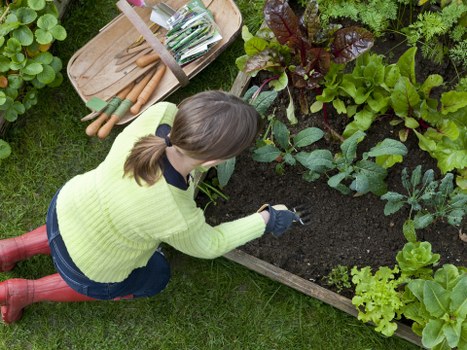
Partnerships with charities and community groups are an essential part of our sustainability model. We coordinate regular donations of surplus plants, reusable timber and reclaimed stone to local charities, community gardens and allotment associations. These partnerships extend the lifecycle of goods, support local green spaces and create social value alongside environmental benefits.
We also partner with local reuse networks to list reclaimed materials, from paving slabs to planters. These charity and community links reduce demand for virgin materials and provide low-cost resources for residents and neighbourhood projects. Our work with charity partners follows simple quality checks to ensure recycled items are safe and fit for reuse.
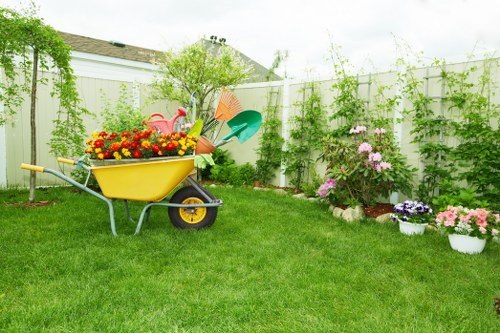
Low-carbon vans and transport strategy
Reducing transport emissions is a high priority. Our fleet strategy emphasises low-carbon vans—hybrid and electric vehicles where practical—supported by route optimisation software to minimise mileage. We maintain an operational policy that consolidates pick-ups for transfer stations and charity drop-offs to reduce duplicate journeys and idle time.
Community alignment and borough considerations
We respect local borough policies: Richmond upon Thames promotes separate collections for organics and mixed recyclables, and encourages householders to compost where possible. Our procedures mirror these priorities so residents using our Teddington gardening recycling services receive waste handling consistent with council guidance.
By adopting borough-friendly separation, we also avoid cross-contamination that would otherwise diminish recycling yields. This collaborative stance also helps when our crews use council transfer stations, so materials are accepted and processed efficiently.
How clients benefit
Choosing sustainable rubbish gardening area services from our Teddington team means:
- Lower environmental impact through higher recycling percentages and composting.
- Reduced carbon footprint via low-emission transport and route consolidation.
- Support for local charities and community reuse projects, turning surplus into social good.
Monitoring, reporting and continuous improvement
We track tonnages of each waste stream and measure progress against our 75% recycling target. Regular audits, staff training refreshers and periodic reviews of transfer station partners help refine our system. Continuous improvement is embedded: we pilot new composting techniques and material reuse pathways to keep advancing our performance.
Final note on sustainable gardening in Teddington
Our goal is to make the sustainable rubbish gardening area model practical and attractive for homeowners, landlords and community projects in Teddington. By combining careful on-site sorting, strong charity partnerships, use of local transfer stations and a low-carbon fleet, Gardening Services Teddington delivers measurable environmental benefits while keeping gardens healthy, functional and beautiful.